Surah ar-Ra‘d, 3
The Expanding Earth
The Arabic term“madda al-arda” translated “as stretched out” in the above verse, means “to be covered, spread out, stretched, pulled out, expanded or opened.” The use of this word in the context of the earth in referring to the…
وَهُوَ ٱلَّذِى مَدَّ ٱلْأَرْضَ وَجَعَلَ فِيهَا رَوَٰسِىَ وَأَنْهَٰرًۭا ۖ وَمِن كُلِّ ٱلثَّمَرَٰتِ جَعَلَ فِيهَا زَوْجَيْنِ ٱثْنَيْنِ ۖ يُغْشِى ٱلَّيْلَ ٱلنَّهَارَ ۚ إِنَّ فِى ذَٰلِكَ لَءَايَٰتٍۢ لِّقَوْمٍۢ يَتَفَكَّرُونَ ٣
It is He Who stretched out the earth and placed firmly embedded mountains and rivers in it and made two types of every kind of fruit. He covers over day with night. There are signs in that for people who reflect.
The Arabic term“madda al-arda” translated “as stretched out” in the above verse, means “to be covered, spread out, stretched, pulled out, expanded or opened.” The use of this word in the context of the earth in referring to the formation of mountains and rivers is exceedingly wise, because looking at the scientific explanation of the formation of the earth, it does indeed appear that mountains and rivers formed through the stretching and expansion of the earth.
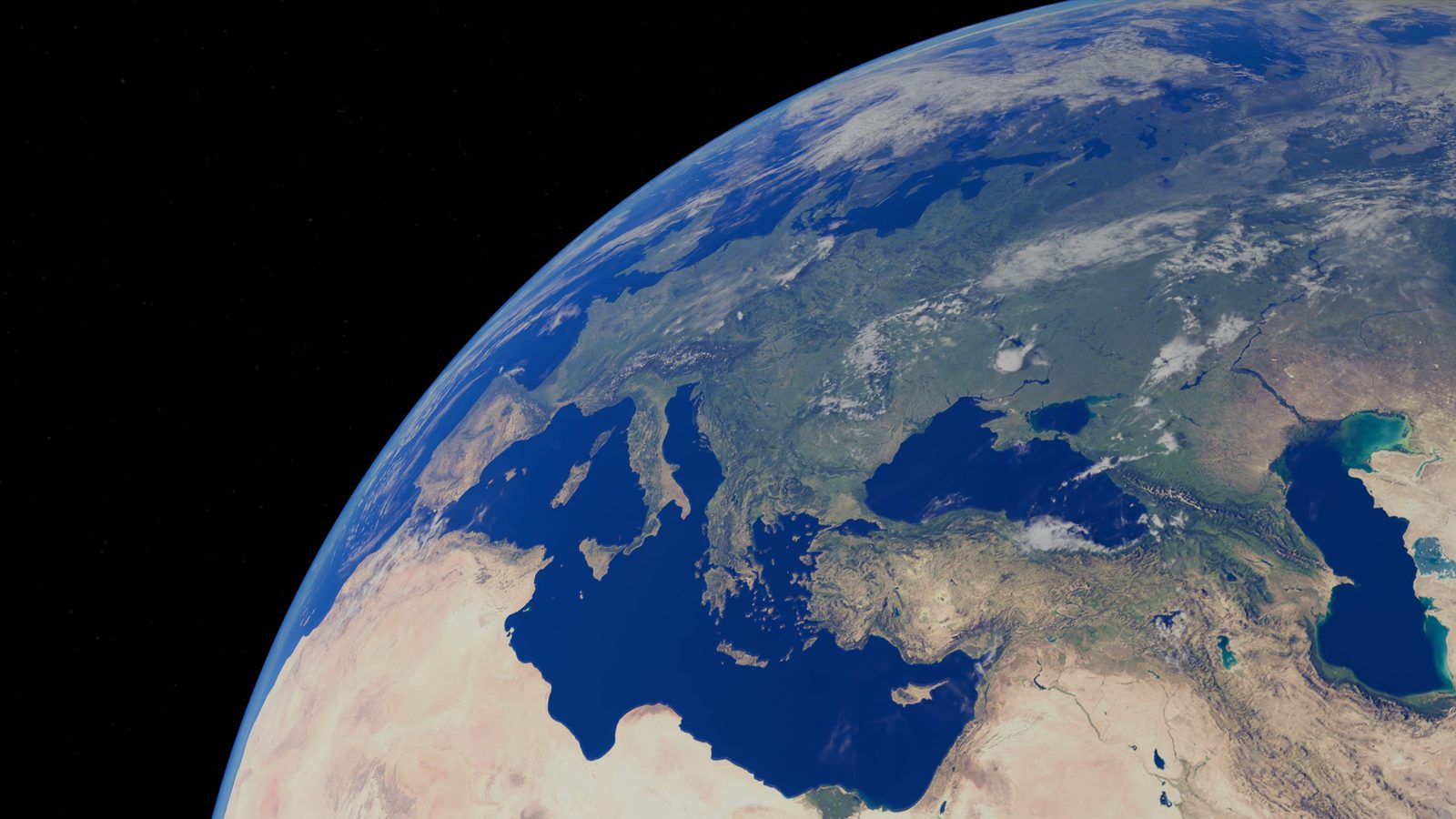
Present day science says that the earth had a very different appearance in the very earliest times compared to what it is now. In his book Die Entstehung der Kontinente und Ozeane (The Origin of the Continents and Oceans) printed in 1915, the famous German scientist Alfred Lothar Wegener proposed that all the continents had originally been one single land mass. This great land mass later came to be known by the Greek name Pangaea, meaning “all continents.1 According to Alfred Wegener's theory of “continental drift,” put forward in 1912, the continents at the two ends of the Atlantic Ocean are still moving away from one another. This theory assumed its latest, present-day state with the development of the scientific theory known as plate tectonics. Continents do not move away from one another by sliding over the ocean floor, rather the ocean floor and the continents drift together over a layer of liquid magma under great heat and pressure and known as the “astenosphere” or “upper crust.” Therefore, both the land continents on earth visible from the outside and also the crust under the sea are both in motion together.2
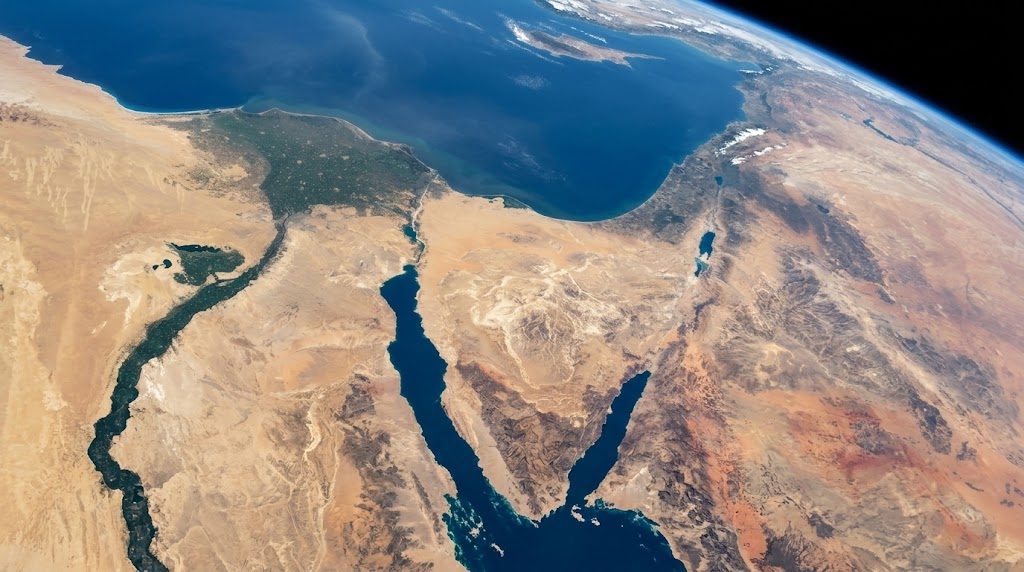
Because the plates that bear the continents move in a manner described as contraction and expansion, or stretching, the continents are today moving away from one another at a rate of approximately three centimeters per year.3 The most evident expansion taking place on the sea bed is that between Arabia and Africa, where the continents are moving away from one another three or four times faster. When the expansion takes place on the continent, rather than on the sea bed, the result is constantly widening valleys such as the Great Rift Valley in the East Africa-Arabia regions.

The Great Rift Valley is a geographical and geological formation stretching some 6000 kilometers, from Sudan in North Africa to Mozambique in the east. The valley ranges from 30-100 kilometers in width and is several thousand kilometers deep.4 This deep valley brought such formations as Mount Kilimanjaro and Mount Kenya into being as Africa and the Arabian Peninsula moved away from one another over a process lasting millions of years. The eastern part of valley consists of the River Jordan, the Dead Sea and the Gulf of Aqaba. It then extends southward along the Red Sea and various lakes in Kenya. Most of these lakes are very deep and below sea-level.5
The book The Expanding Earth describes how it is not only mountains, but also certain river beds that formed due to the “expansion” of the earth:
In all cases the greatest stress occurred at the location of the earth's major rivers. This development suggests that the major riverbeds came into existence as a result of expansion rather than random erosion. Since the continents were fixed on an expanding surface, it may be logically deduced that expansion caused the land masses to stretch and, at the points of greatest tension, to break, thus forming the rivers.6
In statements regarding the continent of North America, the Utah Geological Research Center says:
The ranges and basins have been forming for the past 10 to 20 million years in response to east-west stretching of the earth's crust. Stretching creates tension that is released by slow continuous movement or sudden movement along a fault (a break in the earth's crust), which causes earthquakes. During an earthquake, the mountains rise while the valleys drop along the faults. The stretching continues today.7
Facts such as the expansion of the earth can only be established by comprehensive research and common data from various contemporary branches of science. For example, photographs taken by satellite, the product of 20th century technology, have confirmed the view that the continents were once complementary to one another. Highly accurate measurements have revealed that the expansion in the earth’s crust is continuing at a slow but specific rate. The presence of such special information in the Qur’an, at a time when nobody could determine anything about the continents and, what is more, about formations that took millions of years to develop, once again shows that it is the word of Allah. The way that the Qur’an, revealed 1,400 years ago, contains such profound information about the formation of the earth, is one of its scientific miracles.
Footnotes
- Utah Geological Survey, Geologic Streching; http://geology.utah.gov/teacher/tc/tc12-96.htm ↩
- http://en.wikipedia.org/wiki/Sun ↩
- http://map.gsfc.nasa.gov/m_uni/uni_101stars.html; Will Knight, "Shedding Star Offers Preview of Sun’s Death", New Scientist, 25 Kasım 2005; http://www.bbc.co.uk/science/space/stars/death/index.shtml; http://www.as.utexas.edu/astronomy/education/fall04/komat…; http://science.howstuffworks.com/sun5.htm ↩
- http://www.bbc.co.uk/science/space/stars/death/index.shtml ↩
- "Death of the Sun", National Geographic Channel, 20 Mart 2006, director: Rabinder Minhas, bölüm no. 25, sezon no. 3. ↩
- http://observe.arc.nasa.gov/nasa/exhibits/sun/sun_2.html; http://www.nineplanets.org/sol.html ↩
- http://observe.arc.nasa.gov/nasa/exhibits/sun/sun_5.html ↩